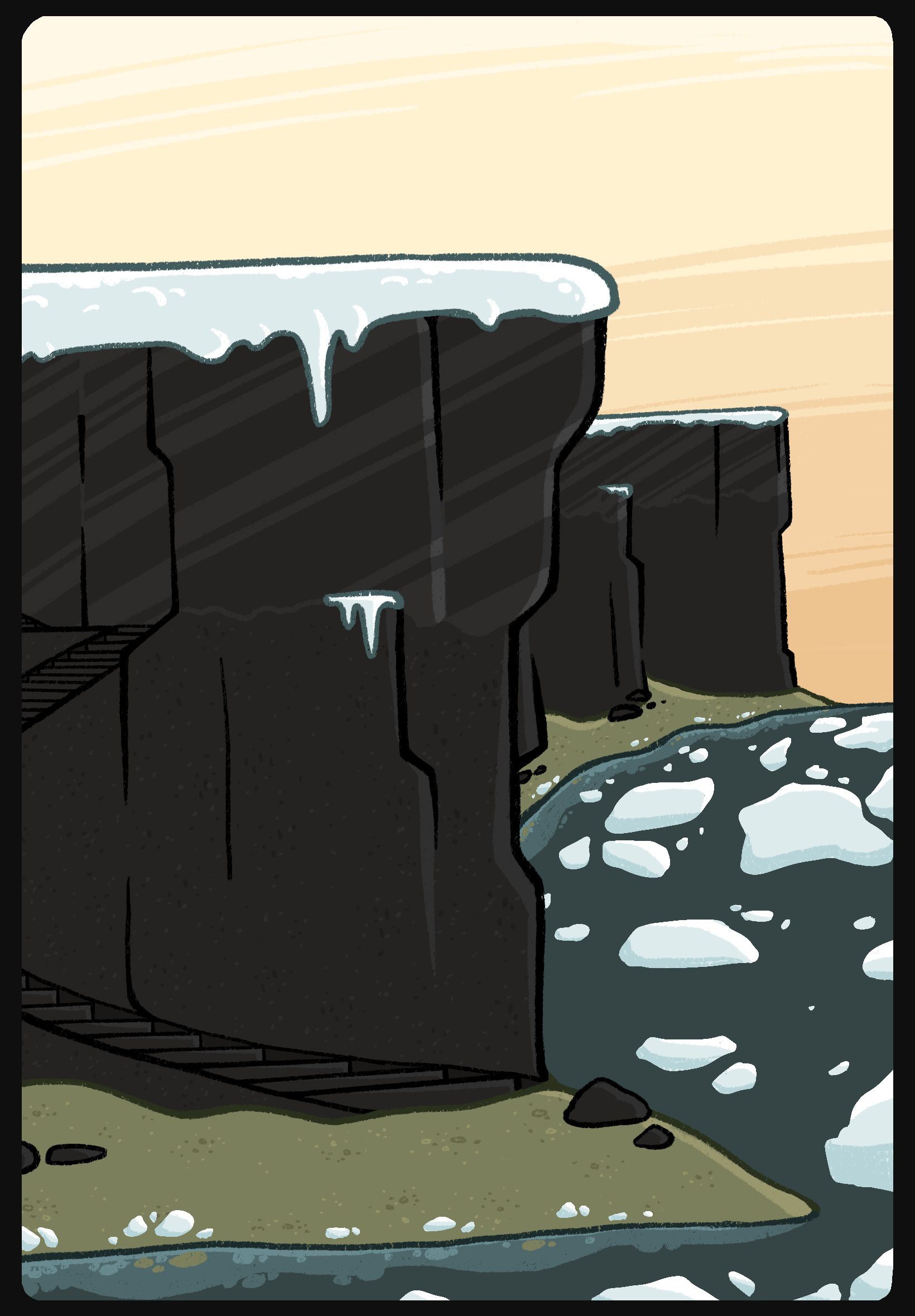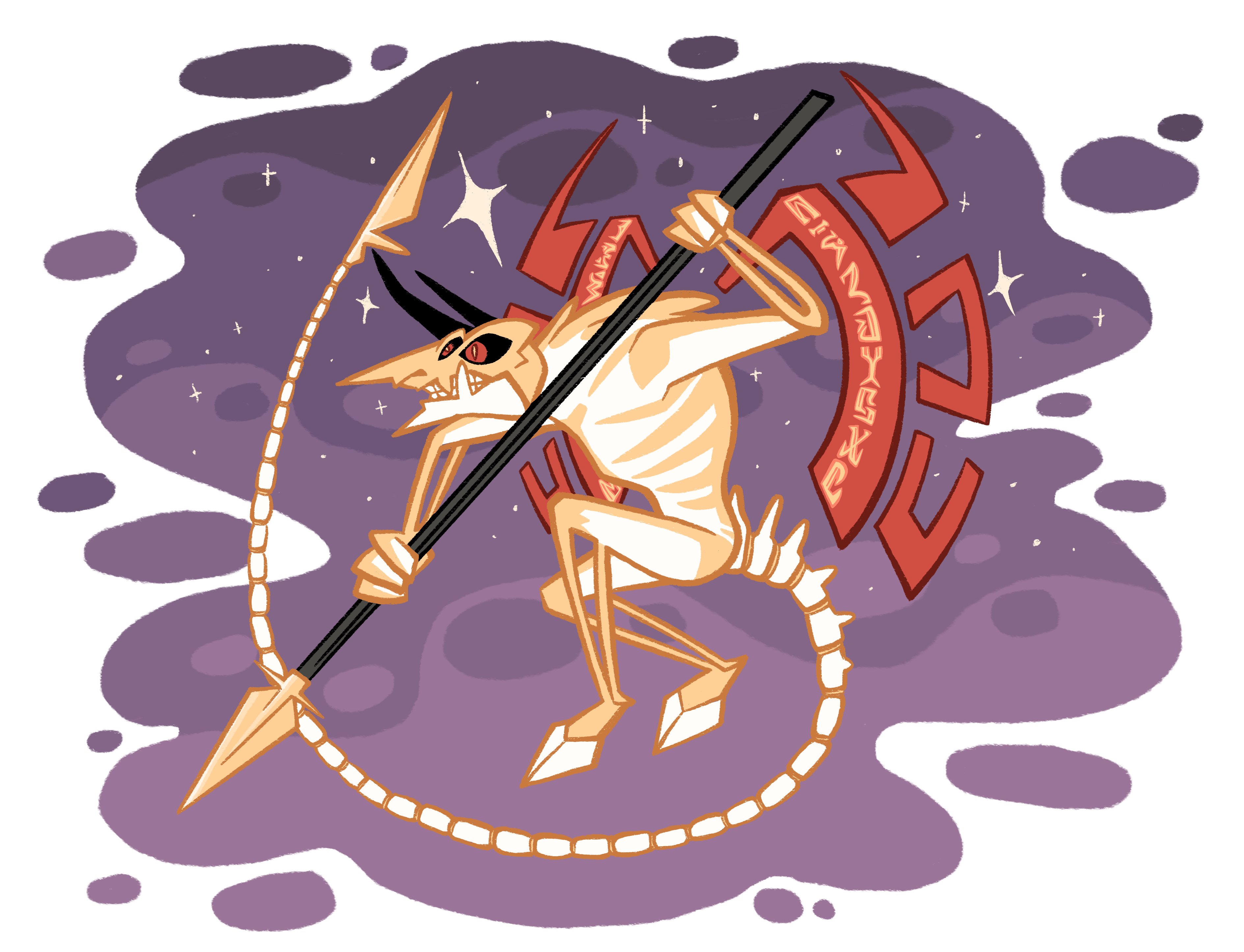
Built from meticulously cut stone, the Great Hall is the peak of Tikal architecture. Which is to say, it isn't much to look at, but it is sturdy, reliable, and it keeps the elements out. Not to mention, it has outlasted every nation, every empire in modern history. Quite the accomplishment for a simple stone hall. From the outside, most of the building is covered in a heavy layer of snow, and this is by design. Turns out all that snow provides some pretty fantastic insulation. The
whale bones, meanwhile, are just for decoration. Two braziers burn near the entrance. The twin purple flames burn night and day, no matter how hard the wind howls.
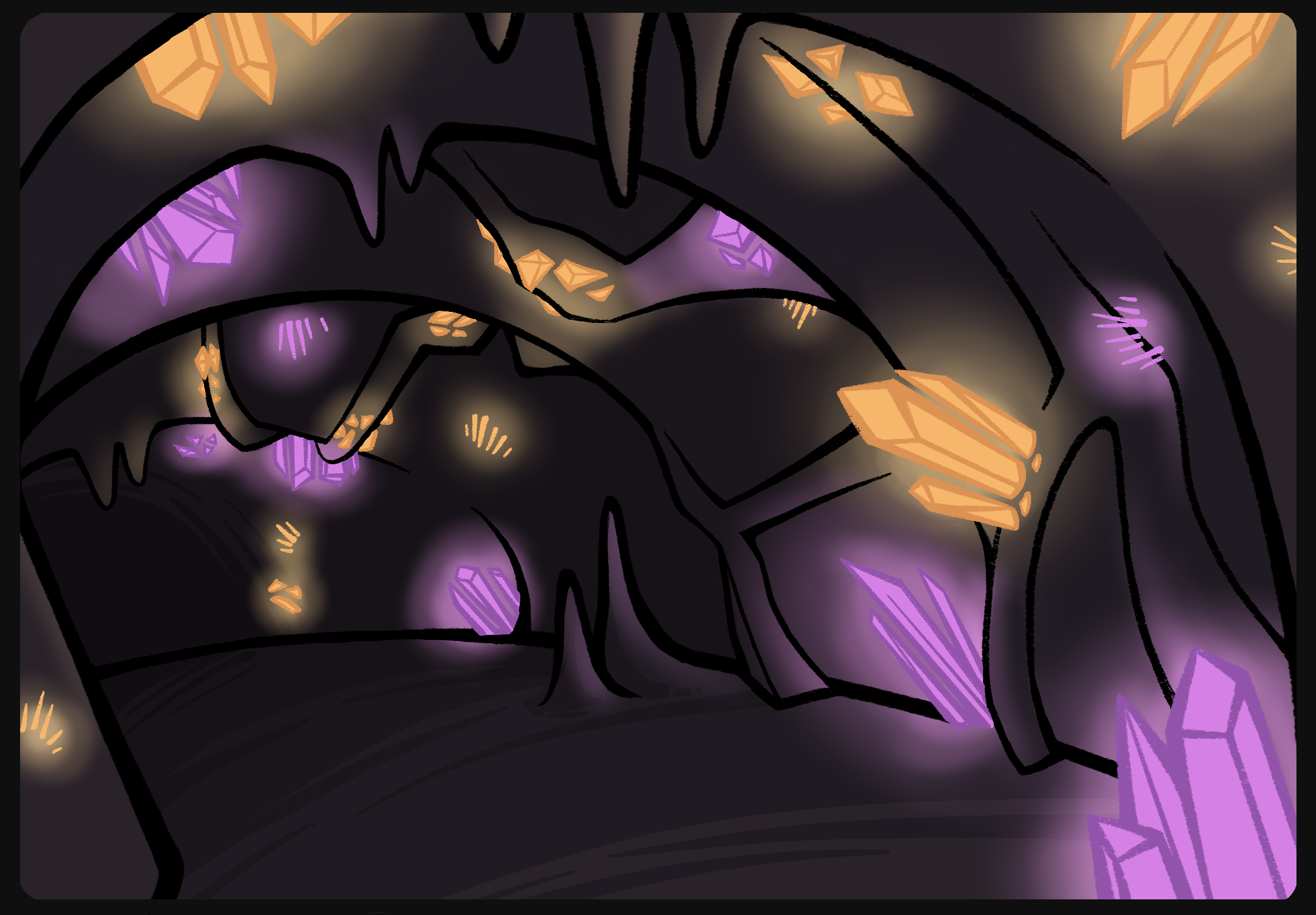
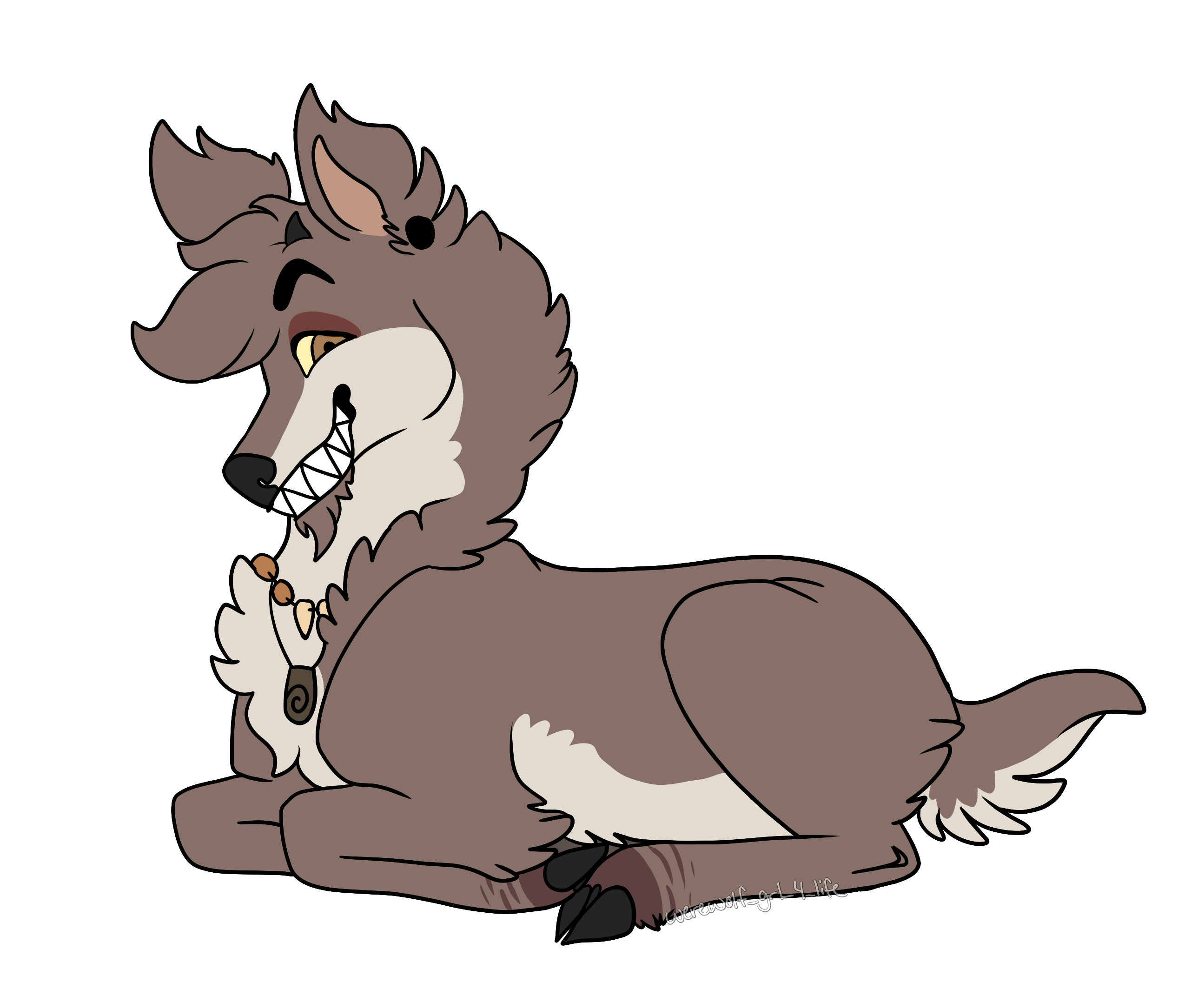
The first thing you'll see upon stumbling in from the cold is the enormous hearth. Like the braziers outside, there's no fuel for the flames– at least nothing you recognize. The hearth is filled with a purple crystalline grit, and enchanted flame comes directly from this. The locals here have had to get creative with the materials at hand. If you were paying attention, you would have noticed that there's no trees or any other source of vegetation for miles. Rather than hike for days at a time to gather firewood, the Tikal work with what they have.
In this desolate clime, you might expect to find a culture just barely clinging onto the margins, but the Tikal have become quite comfortable in this barren wasteland. They are far and away the most cold tolerant people in the world, so while the climate still poses a real and ever-present threat, they do not fear the ice nearly as much as you ought to. And while the land might be completely unsuited for agriculture of any type, this is not a problem for the highly adaptive locals. Somewhere along their very storied history, the Tikal became obligate carnivores. And speaking of, this Great Hall is where the majority of cooking is done, as most meals are large and communal. Twice a day, hearthhands serve up stews, roasts, and all manner of meat-focused meals. Roasted, braised, smoked, fermented, fried in blubber, boiled, salted, brined, anything your heart desires. Though you will notice a total absence of grains or greens. The Tikal can no longer digest plant matter, so you’ll need to bring your own if you’re worried about that sort of thing.
It might surprise you to hear that a society like this engages in trade at all, but even this remote culture has some ties to the world at large. If you’re here at the right times of year, you might see a small team of
Grenvellan traders stop by to deliver the one thing the Tikal want but cannot make for themselves— spices. And why would traders make the arduous journey all the way from Grenvel? They’re here for crystals. It’s the
priest’s job to harvest the crystals, whatever that implies. Both sides seem very happy with this exchange, and both sides are of the opinion that they are taking advantage of the other side. At least everyone involved is very polite about it.
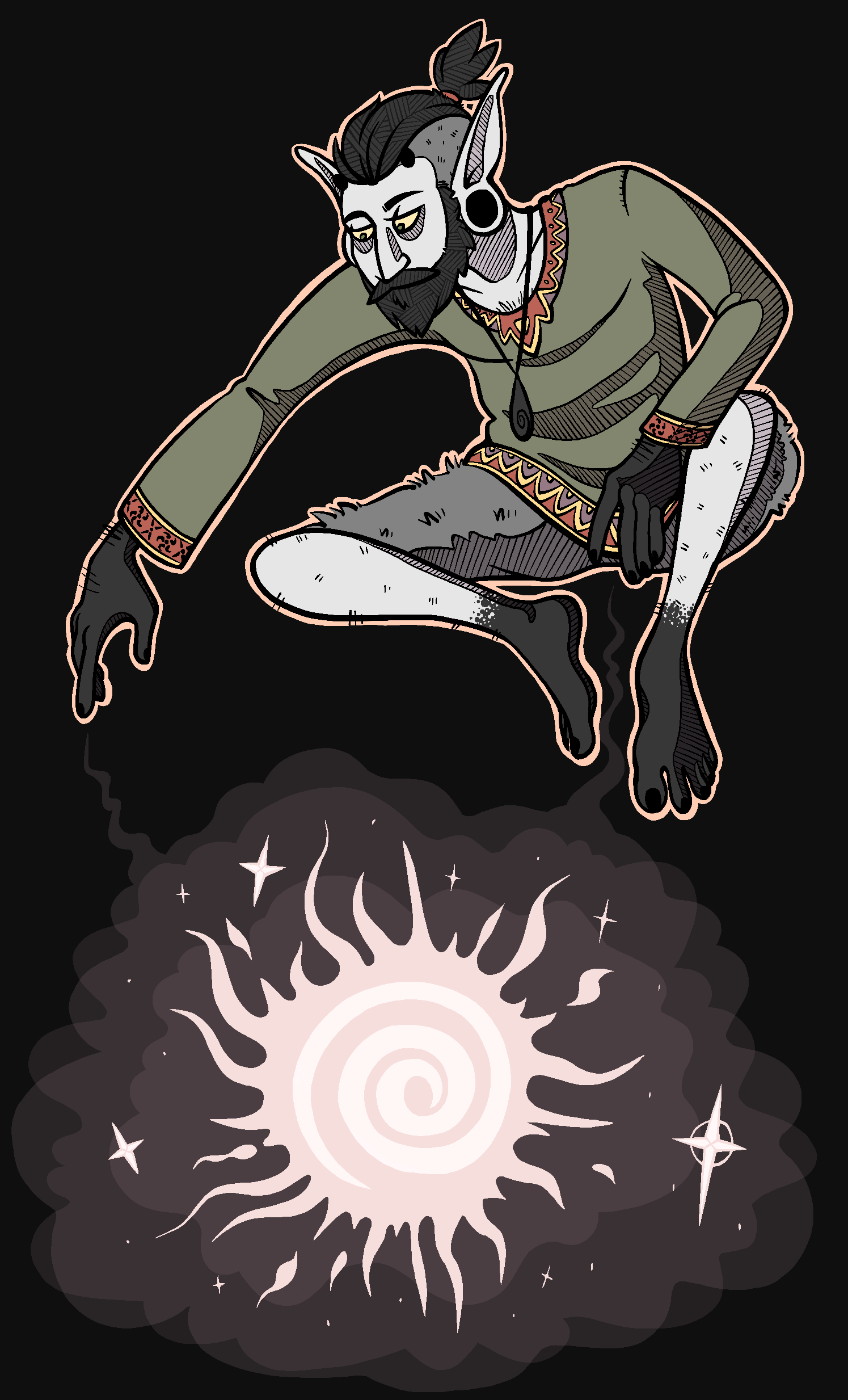
You listen to them talk for more than ten minutes, you’ll hear about their 5,000 year history, says warmly dressed traveler. A very out of place
nenn calling himself
Jiri Przygoda. He is clearly as much a stranger to this place as you are, though he seems somewhat familiar with the culture he’s found himself in.
I like to visit for the summer solstice whenever I get the chance. This place is fascinating. Ecologically, geologically, it’s absolutely fascinating. That’s nothing to say of the people. Wonderful crowd of folk, very eager to tell you all about their history and traditions. Five millenia of unbroken tradition, five millenia of living the same way their ancestors did. Just try to imagine the implications of that. Sure beats out what we’ve got where I come from.
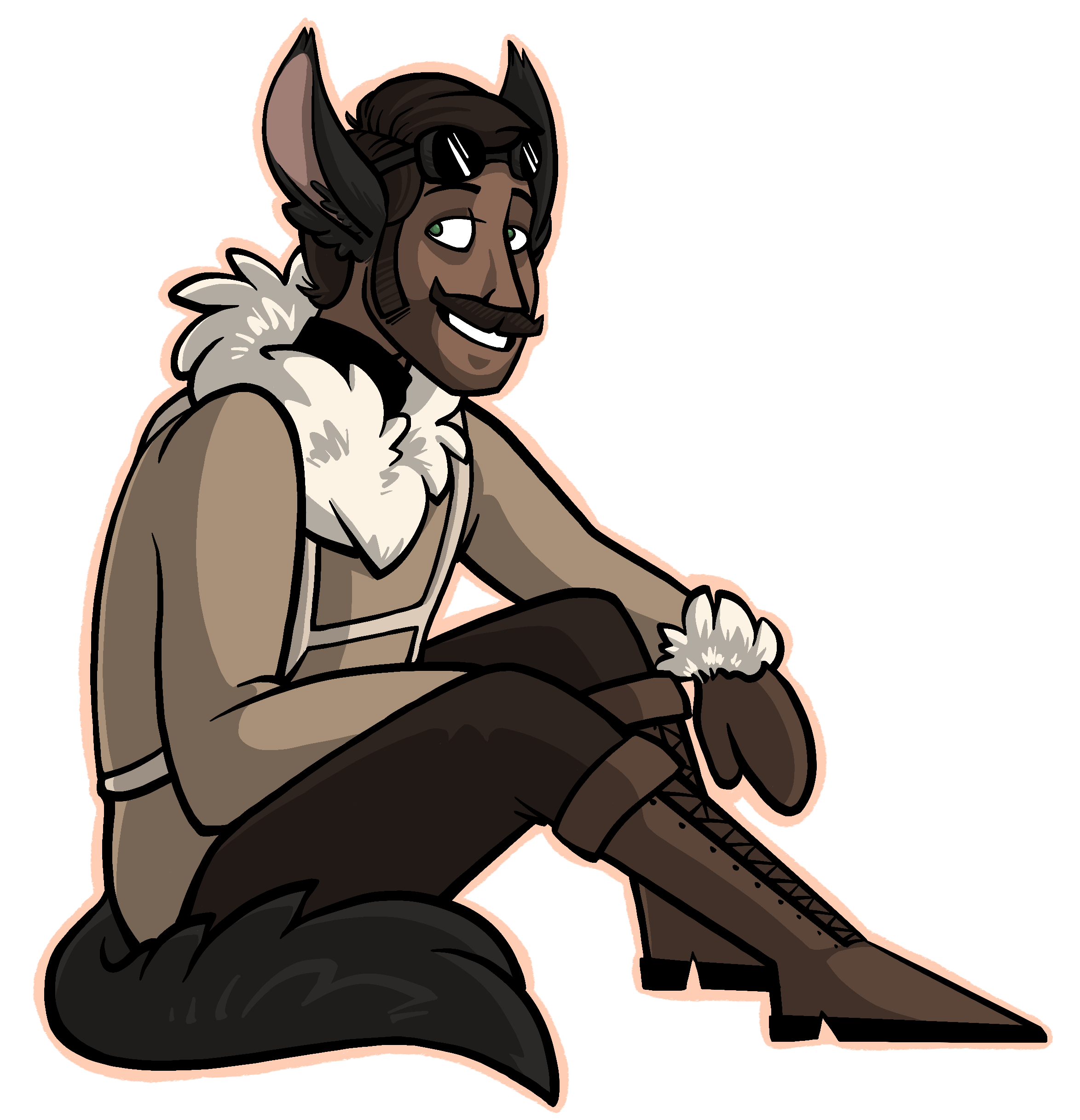
This Mister Przygoda seems to be some sort of academic, what with the heavy pack filled with maps and field guides, not to mention his own notebook brimming with all sorts of sketches and observations. There is so much about this place completely absent from modern recordkeeping, so it’s no wonder the glacier is a curious naturalist’s dream.
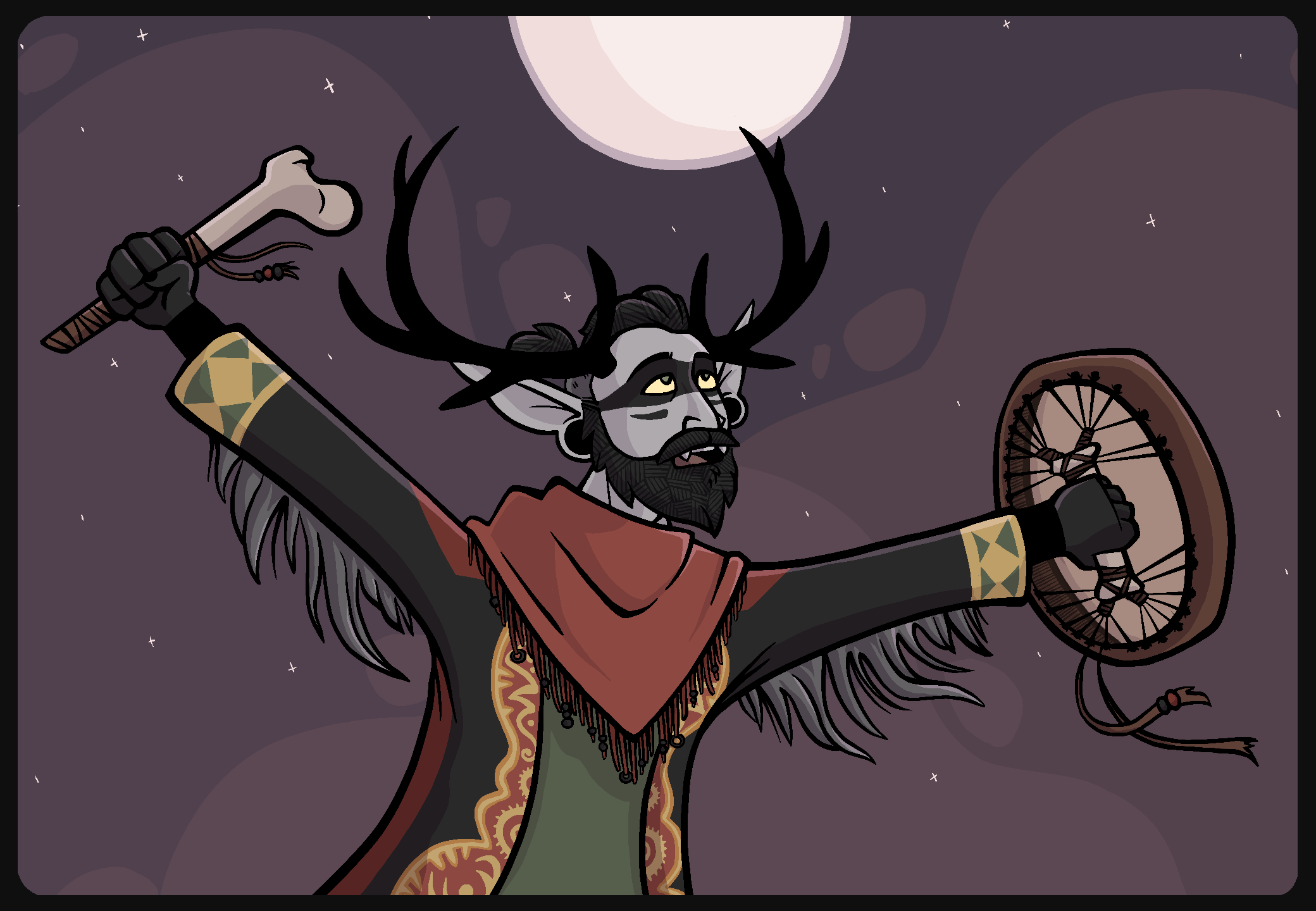
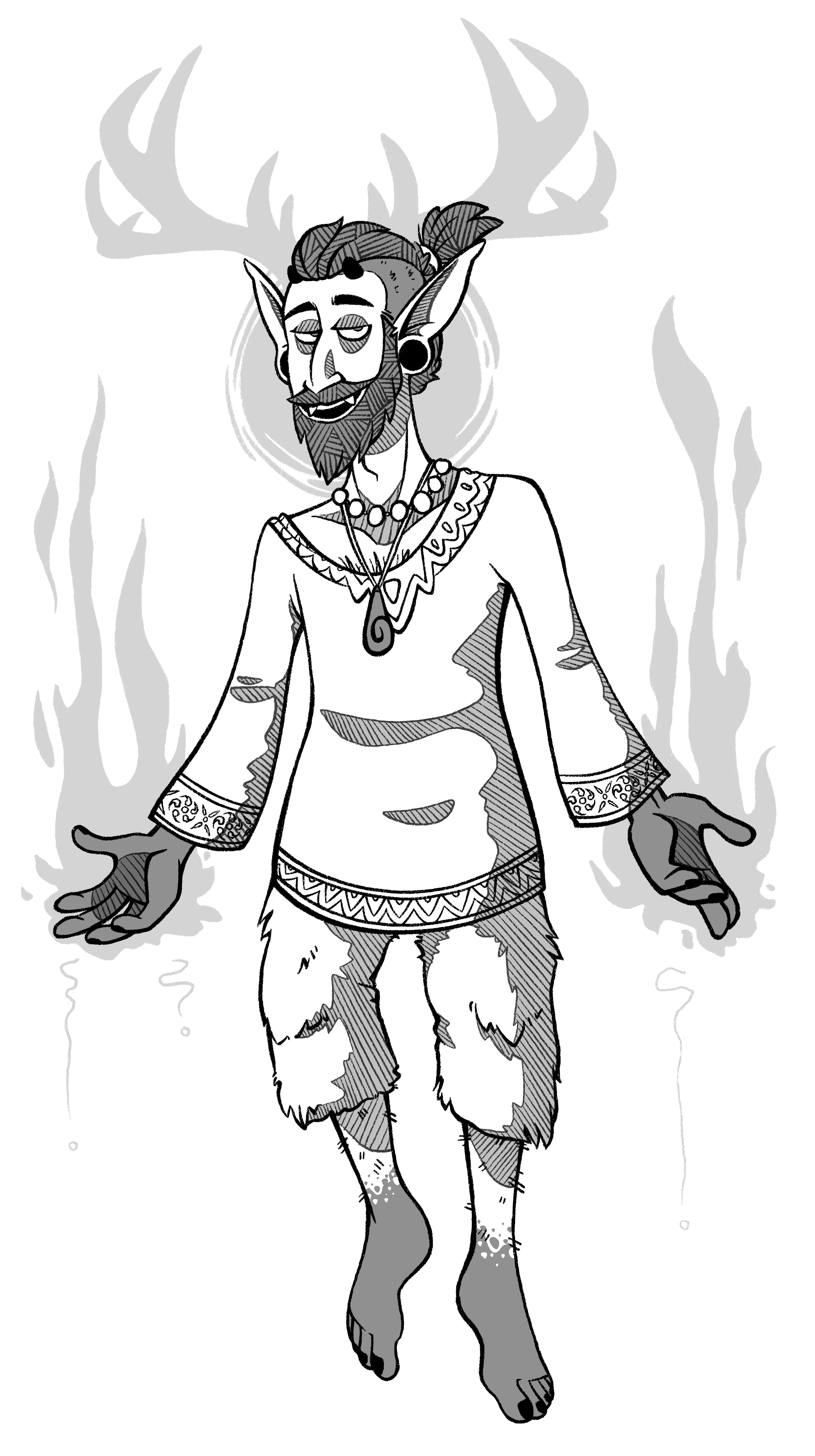
(It should go without saying that Jiri’s budding romance with the tribe’s priest plays a large part in his familiarity with the area).
But you should not mistake the Tikal’s preference for stone based technology and ancient metalworking techniques for “primitiveness.” They are fully aware of the outside world and its social and technological advancements. They simply choose not to participate in that world. Less a matter of ignorance and more a matter of taste, really. And considering
the state of the world, can you
really blame them? Besides, those who want to leave the culture to go live in the city or herd caribou are more than welcome to do so, but the remaining tribe goes to great lengths to maintain the same ultra-orthodox lifestyle of their ancestors.
This is not to say they will not pick and choose what advancements to fold into their society. Maternal care in these ancient stone buildings is just as robust— if not moreso— than you’ll find anywhere on the continent. That sort of thing is in the best interest of the tribe’s survival, and similar improvements in their healing magicks are hardly controversial additions to existing tradition. But when it comes to hunting, their spears work just as well now as they did 5,000 years ago. The old recipes that kept their ancestors fed and healthy taste just as good today. The Tikal have no interest in change for change’s sake, especially when those changes would require materials hostile to the ecosystem. Surely, the tribe would enjoy books and literacy, but not when every part of the book making process requires materials they cannot access or maintain. When a page is torn, it’s lost forever. That sort of impermanence is antithetical to Tikal culture.
They consider these things more of a curiosity than anything else, Jiri explains.
Interesting, but not practical. And these people love practicality, trust me on that.
You should try
visiting with the locals, if you haven’t already. It would be rude not to introduce yourself to your hosts, after all. Or, if your curiosity is insatiable, you can stop acting like you came here for any reason other than that
ominous black tower. Go ahead, everyone knows you’re thinking about it.
go back